Melbourne service

Ceiling Fan Installation in Melbourne

Ceiling fan supply, installation and wiring across Melbourne by licensed SparkAir electricians.

REC 37544ARCtick L214305ABN 44 802 927 696
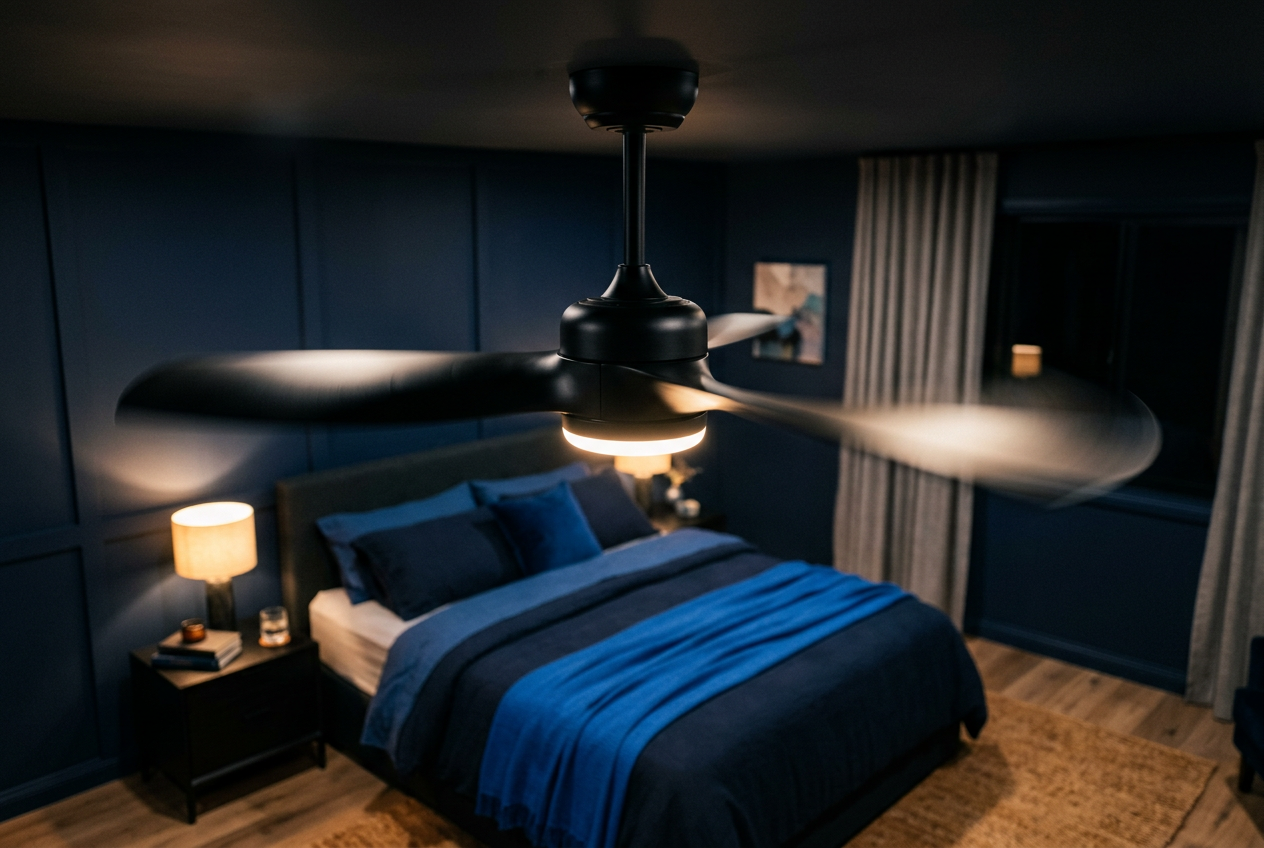
Modern DC motor ceiling fan with integrated LED light in motion in a contemporary bedroom.

Compliant

AS/NZS 3000 Wiring Rules

01Overview

What we do

SparkAir installs and replaces ceiling fans across Melbourne — with or without lights, AC or DC, standard or low-profile. Installation is carried out by a licensed electrician (REC 37544) to the AS/NZS 3000 Wiring Rules, including proper fixing to a rated mounting point.

To book a ceiling fan installation, call 0422 705 075 or request a quote.

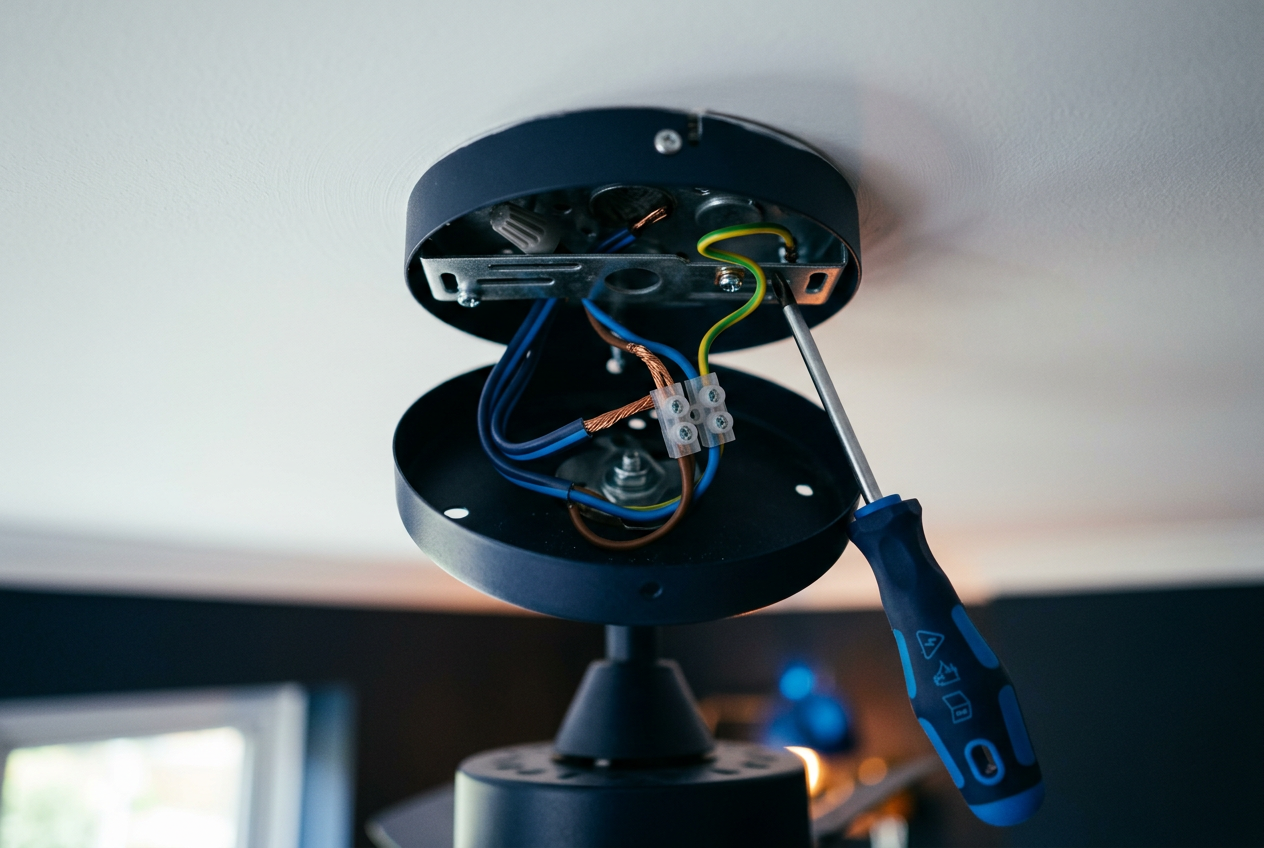
Ceiling fan canopy open on a fresh white ceiling showing tidy new wiring and insulated screwdriver.

02Details

How it works

What ceiling fan installation involves

  1. Confirm the fan is suitable for the room size and ceiling height.
  2. Check the existing mounting point is rated to carry a fan (not just a light).
  3. Isolate power at the switchboard and remove the old fitting if replacing.
  4. Install a suitable fan-rated bracket and wire the fan and any light kit.
  5. Fit the wall control or remote and commission the fan.
  6. Test operation, direction and speed settings.

If the ceiling doesn't have a fan-rated fixing point, we install one. A standard light-rated batten holder isn't designed to carry a rotating fan.

Choosing the right fan

  • AC fans — cheaper, reliable, usually wall-controlled.
  • DC fans — quieter, more efficient, more speeds, usually remote-controlled.
  • Low-profile fans — for ceilings under about 2.4 m.
  • Fans with integrated LED light — replace a light and fan in one fitting.
  • Outdoor-rated fans — for alfresco areas and covered decks.

Blade span should suit the room size. Under-sized fans move too little air; over-sized fans in small rooms feel gusty.

Room-by-room considerations

  • Bedrooms — DC fans are worth the extra cost for the quieter low speeds. A remote with a sleep timer beats getting out of bed.
  • Living and dining rooms — larger blade span moves more air at lower speed. Pair with a split system for evenly distributed cool air on hot Melbourne days.
  • Alfresco and covered decks — use IP-rated outdoor fans designed for damp locations. Standard indoor fans corrode and fail outside.
  • Low ceilings — under about 2.4 m, a low-profile hugger fan keeps clearance safe underfoot.

Standards and compliance

Ceiling fans are installed to the AS/NZS 3000 Wiring Rules on a fan-rated fixing point. A standard light-rated batten holder isn't designed to carry a rotating load, so we install a rated bracket where one isn't already there. Where the job involves new switching, an extra circuit or a control upgrade, prescribed work is certified with an Electrical Safety Certificate on completion under Energy Safe Victoria requirements.

Get a fast quote

Need a licensed sparky in Melbourne?

Tell us about the job and we'll come back with a written quote.

03Coverage

Melbourne suburbs we cover

Local response across inner Melbourne and surrounding suburbs. Not sure if we cover your street? Give us a call.

05FAQs

Frequently asked questions

Q1

Can you install a fan where there's currently just a light?

Usually yes. The existing wiring can often be reused, but the mounting point needs to be upgraded to a fan-rated fixing. We check the ceiling structure and install the correct bracket before hanging the fan.

Q2

Do I need a separate switch for the fan?

It depends on the fan. Some are fully remote-controlled. Others need a wall control for fan speed and a separate switch for the light. We'll confirm what's needed for the model you choose.

Q3

AC or DC — which fan should I pick?

DC fans are generally quieter, more efficient, and offer more speeds with a remote. AC fans are cheaper and simpler. Both are reliable when installed correctly.

Q4

Can you install ceiling fans in outdoor alfresco areas?

Yes, using outdoor-rated fans designed for damp locations. Standard indoor fans aren't suitable for outdoor use.

Q5

What blade span should I choose for my room?

Rough guide: rooms up to 10 m² suit a 42-inch (1050 mm) fan; 10–20 m² suits 48–52 inch (1200–1320 mm); larger open-plan spaces often need 54–60 inch (1370–1520 mm) or two fans. We confirm on site based on ceiling height and layout.

Q6

Can you reverse the fan for winter use?

Most modern fans have a summer/winter direction switch or a reverse function on the remote. Running the fan in reverse at low speed pushes warm air trapped near the ceiling back down, which helps rooms with a split system in heat mode.

Ready

Book ceiling fan installation in Melbourne today