
Q1
How often do smoke alarms need to be replaced?
Every 10 years. The sensor degrades over time and can't be renewed by changing the battery. If your alarms are past 10 years, they should be replaced regardless of whether they still beep.
Melbourne service
Compliant smoke alarm supply, installation and testing for homes and rentals across Melbourne.
Compliant
AS/NZS 3000 Wiring Rules
01Overview
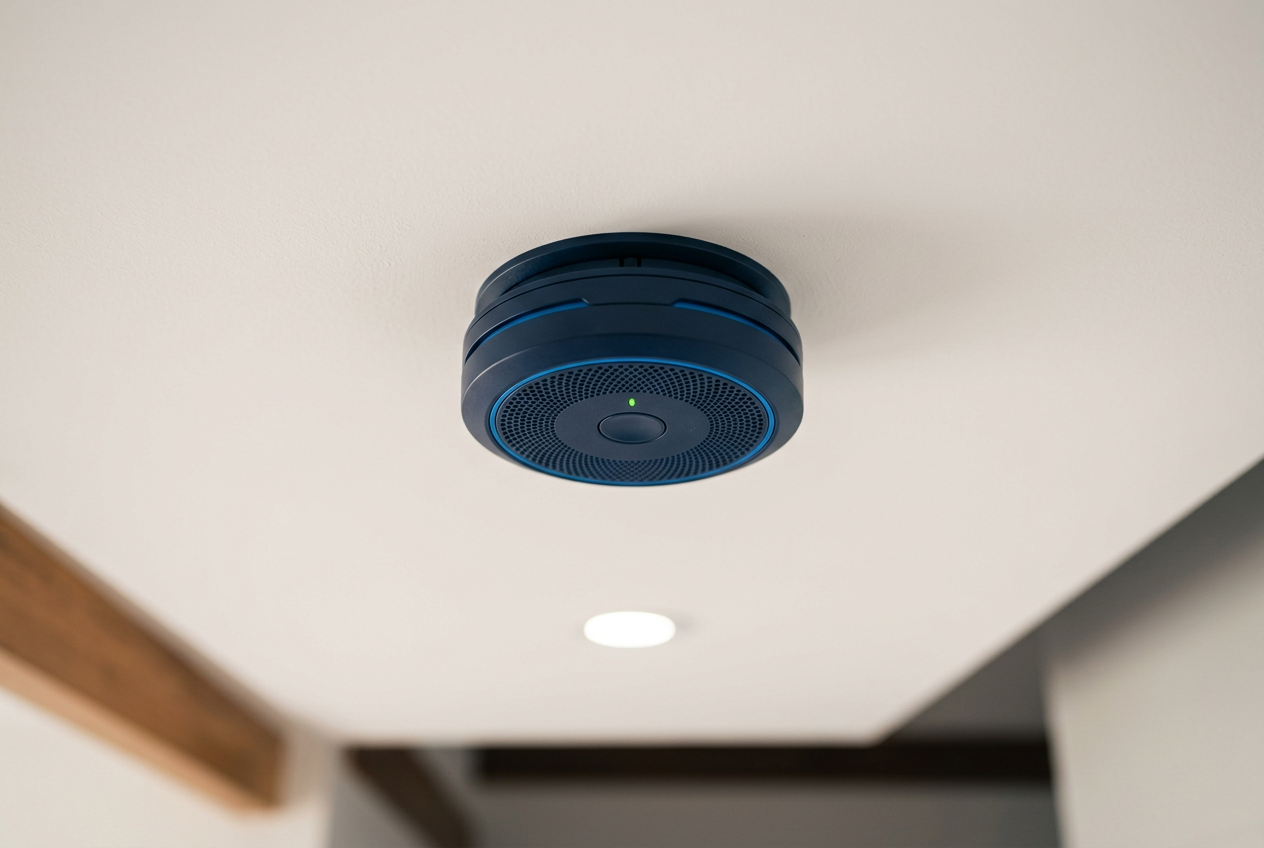
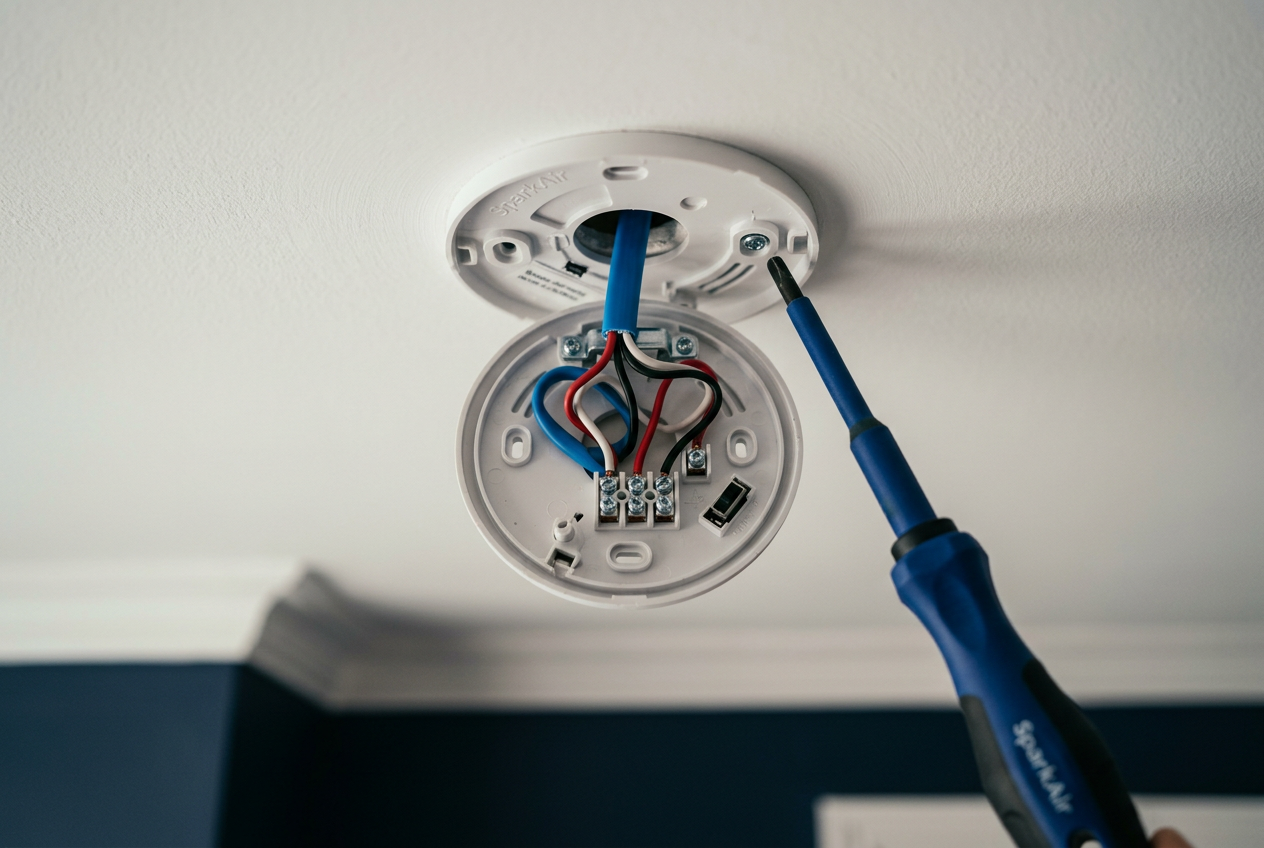
SparkAir installs, replaces and tests smoke alarms across Melbourne — 240V mains-powered photoelectric alarms with battery backup, interconnected across the home to AS 3786 and the Building Code of Australia. Installation is carried out by a licensed electrician (REC 37544).
To book a smoke alarm installation or replacement, call 0422 705 075 or request a quote.
02Details
Photoelectric alarms detect the smouldering smoke typical of most residential fires faster than ionisation alarms. Interconnecting alarms so they all sound at once gives everyone in the home more time to react, especially at night and in double-storey layouts.
Smoke alarms should be replaced every 10 years — the sensor degrades and can't be renewed by changing the battery.
Placement should avoid kitchens, bathrooms and areas of high air movement to reduce nuisance alarms.
Alarms are installed to AS 3786 (product standard for smoke alarms) and positioned per the Building Code of Australia and the National Construction Code. Hardwiring and interconnection work is carried out under AS/NZS 3000, and every job is finalised with an Electrical Safety Certificate lodged with Energy Safe Victoria. For rental properties, placement and count are cross-checked against the Residential Tenancies Regulations 2021 so the record supports the two-yearly safety obligation.
Get a fast quote
Tell us about the job and we'll come back with a written quote.
04Services
Home and workplace chargers, sized to your switchboard.
Learn moreBring older boards up to current standards with RCD protection.
Learn moreEnergy-efficient interior and exterior lighting design.
Learn moreElectric cooktops, ovens and appliance wiring done to spec.
Learn moreSupply, install and service under ARCtick L214305.
Learn moreElectrical safety inspections for Victorian rental providers.
Learn moreScheduled testing and preventative maintenance for homes and sites.
Learn moreNon-urgent fixes for faults, sockets, circuits and appliances.
Learn moreNew circuits, GPOs and rewires for renovations and extensions.
Learn moreInstallation and testing to protect people and appliances.
Learn moreBalanced, quiet ceiling fans wired and mounted safely.
Learn moreNew data, TV and antenna points cabled to a tidy standard.
Learn more05FAQs
Every 10 years. The sensor degrades over time and can't be renewed by changing the battery. If your alarms are past 10 years, they should be replaced regardless of whether they still beep.
We install 240V hardwired photoelectric alarms with battery backup, interconnected across the home wherever cabling allows. Battery-only alarms are used only where hardwiring isn't practical.
Interconnected alarms are linked so that when one detects smoke, all alarms in the home sound at once. That gives more warning at night and in areas away from the fire.
Rental smoke alarm requirements vary by construction date and previous compliance work. We check your alarms against current requirements as part of the two-yearly rental safety check.
In most homes we can, using AS 3786-compliant radio-frequency (RF) interconnected alarms. Each alarm still runs on 240V with battery backup, but they talk to each other wirelessly — ideal for renovated homes, older brick construction, or double-storey layouts where pulling cable between levels is invasive. We test the RF link at commissioning to confirm every alarm triggers together.
Avoid within 300 mm of light fittings, cornices or corners, and don't place alarms in kitchens, bathrooms, laundries, or directly in the path of ducted heating and cooling vents. Steam, cooking vapours and high air movement cause nuisance alarms. We select placement using AS 3786 and Building Code of Australia guidance so alarms respond quickly to real smoke without repeatedly triggering on toast.
Carbon monoxide alarms are a separate device and are usually recommended alongside gas appliance servicing rather than as part of routine smoke alarm work. If you have gas heating or a gas cooktop and want CO monitoring installed at the same visit, mention it when you book and we'll bring compliant units.