
Q1
Do you install Cat6 or Cat5e?
We install Cat6 as standard for new work. It supports gigabit speeds comfortably and gives headroom for future upgrades. Cat5e is only used when matching an existing installation.
Melbourne service
Data cabling, TV point and antenna outlet installation across Melbourne by SparkAir.
Compliant
AS/NZS 3000 Wiring Rules
01Overview
SparkAir installs data cabling, TV points and antenna outlets across Melbourne — for homes, home offices and small commercial fit-outs. Structured cabling is installed by licensed cablers to ACMA requirements, alongside our REC 37544 electrical work.
To book a data or TV point installation, call 0422 705 075 or request a quote.
02Details
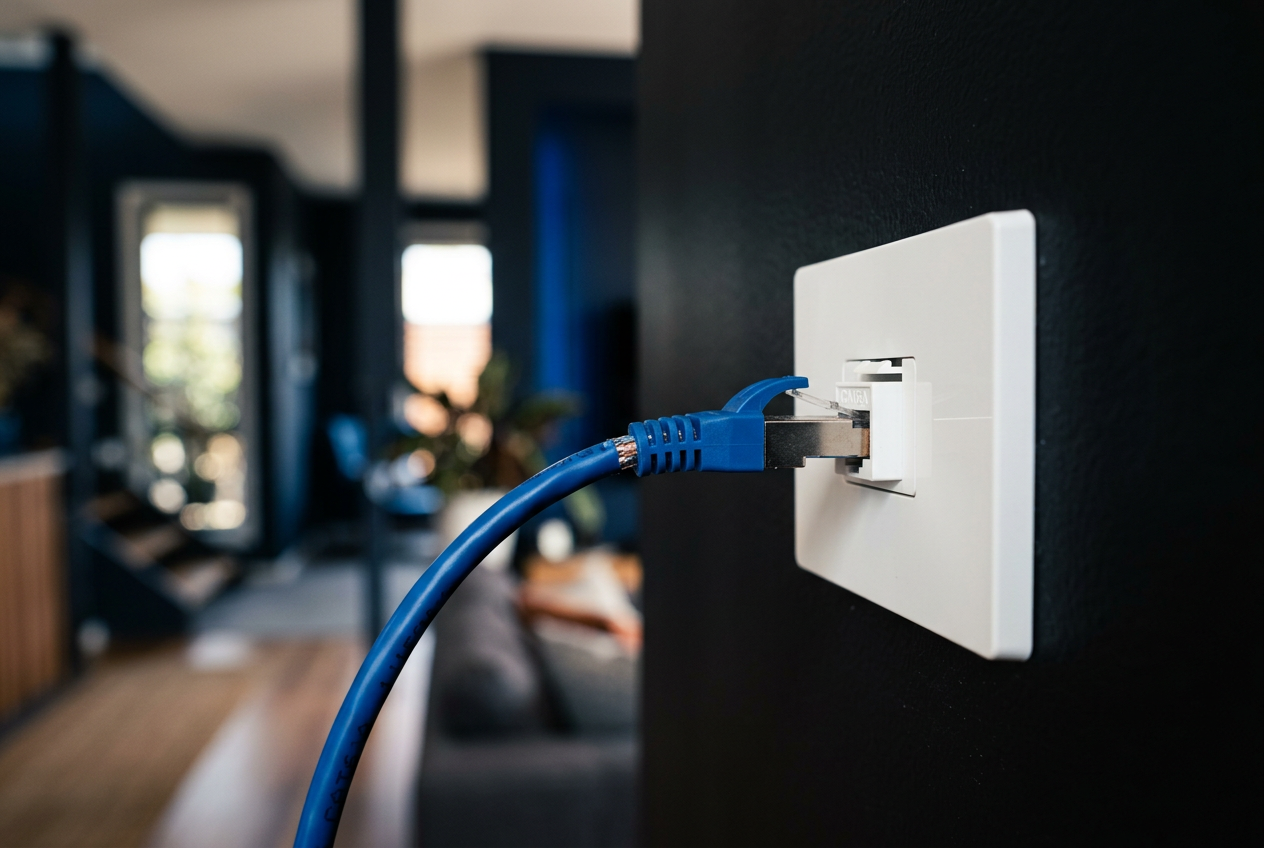
Wi-Fi is convenient, but a hardwired connection is faster, more stable and lower latency — better for video calls, streaming, gaming and working from home. Running a Cat6 cable to key rooms also lets you place Wi-Fi access points properly instead of relying on a single router.
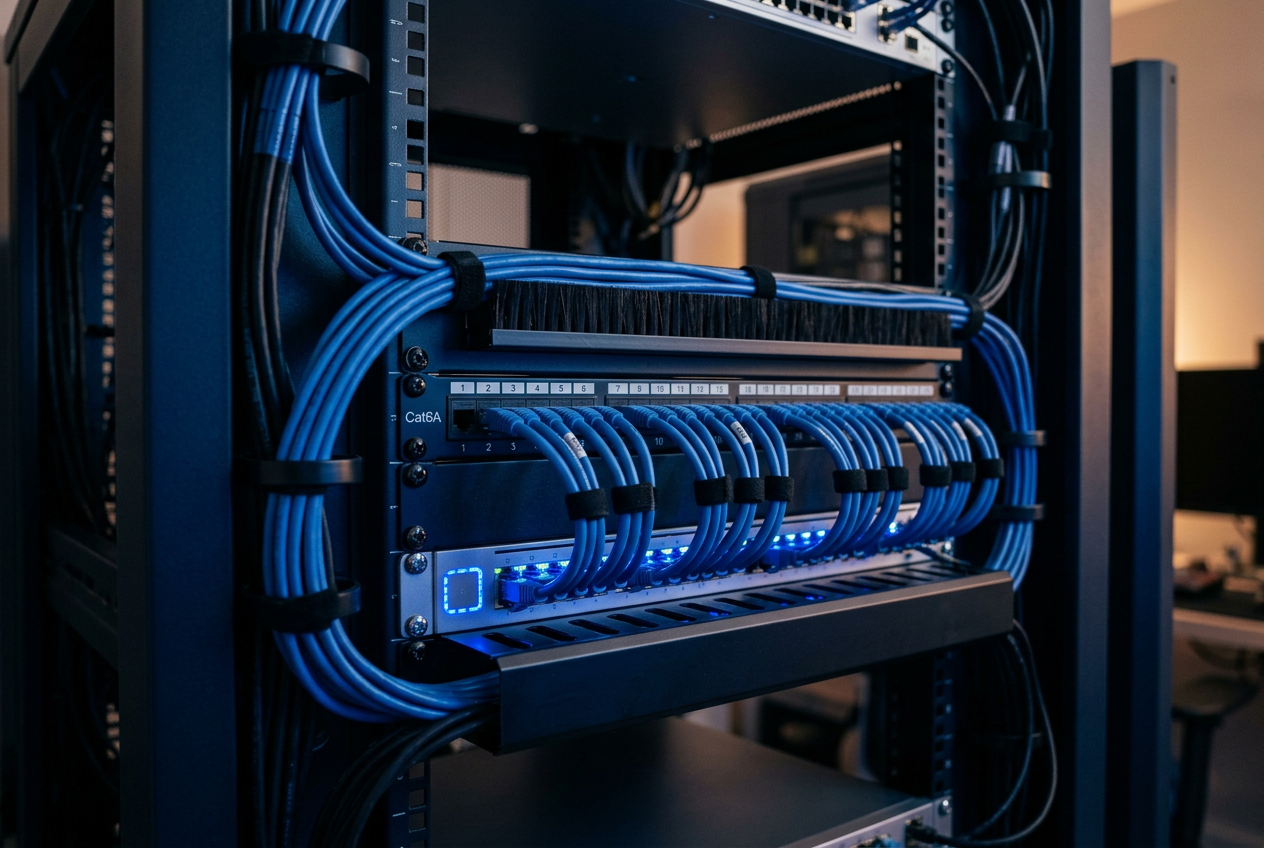
Structured cabling is installed by ACMA-registered cablers to the AS/CA S008 and AS/CA S009 Australian Communications Industry Standards, using Cat6 as our default. Any electrical work associated with data or TV installs — new powerpoints, recessed outlets behind a TV, dedicated circuits for AV equipment — is completed under REC 37544 to the AS/NZS 3000 Wiring Rules, and closed out with an Electrical Safety Certificate lodged with Energy Safe Victoria. Every data run is tested and labelled at both ends before we leave.
Get a fast quote
Tell us about the job and we'll come back with a written quote.
03Coverage
Local response across inner Melbourne and surrounding suburbs. Not sure if we cover your street? Give us a call.
04Services
Home and workplace chargers, sized to your switchboard.
Learn moreBring older boards up to current standards with RCD protection.
Learn moreEnergy-efficient interior and exterior lighting design.
Learn moreElectric cooktops, ovens and appliance wiring done to spec.
Learn moreSupply, install and service under ARCtick L214305.
Learn moreElectrical safety inspections for Victorian rental providers.
Learn moreScheduled testing and preventative maintenance for homes and sites.
Learn moreNon-urgent fixes for faults, sockets, circuits and appliances.
Learn moreNew circuits, GPOs and rewires for renovations and extensions.
Learn moreInstallation and testing to protect people and appliances.
Learn moreInterconnected 240V alarms to meet Victorian requirements.
Learn moreBalanced, quiet ceiling fans wired and mounted safely.
Learn more05FAQs
We install Cat6 as standard for new work. It supports gigabit speeds comfortably and gives headroom for future upgrades. Cat5e is only used when matching an existing installation.
Yes. We run a new coaxial cable from the antenna or existing distribution point and terminate a wall plate in the new location. We can also add a data outlet at the same time.
We don't sell managed Wi-Fi, but running Cat6 to well-placed access-point locations is the single biggest thing you can do to fix Wi-Fi dead spots — especially in double-storey and older brick homes.
Yes. We can install a recessed power outlet and data/HDMI conduit behind the TV so cables run neatly inside the wall rather than hanging down the front.
Yes. All structured cabling, TV points and antenna outlets are installed by ACMA-registered cablers, and any adjoining electrical work — new powerpoints, recessed outlets, dedicated circuits behind a TV — is completed under REC {business.rec} to the AS/NZS 3000 Wiring Rules. That's the requirement for anyone touching fixed cabling connected to the telecommunications network in Australia.
In most single- and double-storey Melbourne homes we route cable through the roof space and drop down internal wall cavities, so the only visible work is a neat wall-plate cut-out. Where a cavity is blocked by noggins or fire-stops, we discuss the least invasive route on site before cutting. Any cornice or plaster cut-outs are patched cleanly, and painting touch-ups are noted in the quote.
Yes. We install outdoor-rated Cat6 with UV-stable jacket, weather-sealed wall plates and IP-rated glands where the cable exits the wall. For alfresco Wi-Fi coverage, running a hardwired backhaul to a proper outdoor access point is far more reliable than a repeater, and it lets you separate the guest network from the main house SSID.